Inventory: Top 10 materials that have the greatest potential for improving lithium battery performan
Lithium Grid News: The development of lithium batteries is in a bottleneck period, and the energy density is close to its physical limit. Poor cycle life. The main raw materials are abundant.
Lithium Grid News: The development of lithium batteries is in a bottleneck period, and the energy density is close to its physical limit. We need new materials or technologies to achieve breakthroughs in lithium batteries. The following battery materials have been optimistic in the industry, or will become a breakthrough in breaking lithium battery barriers.
1. Silicon-carbon composite anode material
After the large-screen and diversified functions of digital terminal products, new requirements for battery life have been put forward. At present , the capacity of lithium battery materials is low, which cannot meet the increasing demand of terminals for batteries.
As a kind of future anode material, silicon-carbon composite material has a theoretical gram capacity of about 4200 mAh/g or more, which is more than 10 times higher than 372 mAh/g of graphite-based anode. After industrialization, the capacity of the battery will be greatly improved. The main problems with silicon-carbon composites today are:
1. During the charging and discharging process, the volume expansion can reach 300%, which will cause the silicon material particles to be powdered, resulting in loss of material capacity. At the same time, the liquid absorption capacity is poor.
2. Poor cycle life. At present, the above problems are solved by silicon powder nanocrystallization, silicon carbon coating and doping, and some enterprises have made certain progress.
Related R&D companies: At present, major material manufacturers are developing silicon-carbon composite materials such as BTR, Snow, Star City Graphite, Huzhou Chuangya, Shanghai Shanshan, Huawei, and Samsung. The domestic research and development of silicon-based materials for anode materials companies is that most of the materials companies are still in the research and development stage. At present, only Shanghai Shanshan has entered the stage of mass production.
Second, lithium titanate
In recent years, domestic research and development of lithium titanate has a high enthusiasm. The advantages of lithium titanate are:
1. Long cycle life (up to 10,000 times), belonging to zero strain material (volume change less than 1%), does not produce traditional SEI film;
2. High security. The lithium insertion potential is high, no dendrites are formed, and the thermal stability is extremely high during charging and discharging; it can be quickly charged.
At present, the main factor limiting the use of lithium titanate is that the price is too high, higher than conventional graphite, and the lithium silicate has a very low gram capacity of about 170 mAh/g. Only by improving the production process and reducing the production cost, the long cycle life and fast charge of lithium titanate can play a role. In combination with the market and technology, lithium titanate is more suitable for use in buses and energy storage areas where space is not required.
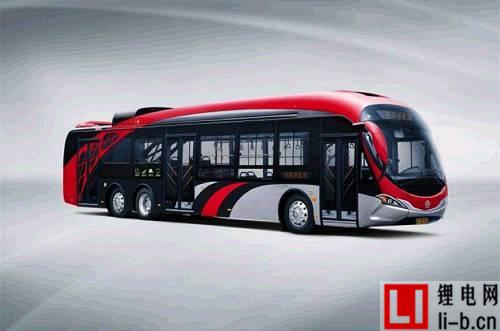
Related R&D companies: Zhuhai Yinlong , Sichuan Xingneng, Huzhou Weihong Power Co., Ltd., Shenzhen Beitray New Energy Materials Co., Ltd., Hunan Shanshan New Materials Co., Ltd., and many smaller titanium around Anhui and Shenzhen Lithium acid manufacturer.
Third, graphene
Since winning the Nobel Prize in 2010, graphene has received worldwide attention, especially in China. There has been a boom in graphene research and development in China, which has many excellent properties, such as good light transmission, excellent electrical conductivity, high thermal conductivity and high mechanical strength. Potential applications of graphene in lithium-ion batteries are:
1. As a negative electrode material. Graphene has a high gram capacity and a reversible capacity of about 700 mAh/g, which is higher than the capacity of a graphite-based negative electrode. In addition, the good thermal conductivity of graphene ensures its stability in the battery system, and the graphene sheet spacing is larger than that of graphite, so that lithium ions diffuse smoothly between the graphene sheets, which is beneficial to improve the battery power performance. Because the production process of graphene is immature and the structure is not stable, there are still some problems in the use of graphene as a negative electrode material, such as low initial discharge efficiency, about 65%; poor cycle performance; higher price, significantly higher than traditional graphite negative electrode. .
2. As a positive and negative electrode additive, it can improve the stability of lithium battery, prolong cycle life and increase internal conductivity.
In view of the immature, high-priced, and unstable performance of graphene's current mass production process, graphene will be the first to be used as a positive and negative electrode additive in lithium-ion batteries.
Related R&D companies: Weiwei, Dongxu Optoelectronics, Qingdao Xinxin New Energy, Xiamen Kainer, etc.
Fourth, carbon nanotubes
Carbon nanotubes are carbon materials with a graphitized structure, which have excellent electrical conductivity. At the same time, due to their small depth and short stroke, the polarization of the negative electrode material is small when charging and discharging at a large rate. Large rate charge and discharge performance of the battery.
Disadvantages: When carbon nanotubes are directly used as anode materials for lithium batteries, there are problems such as high irreversible capacity, voltage hysteresis, and inconspicuous discharge platforms. Single-walled carbon nanotubes were prepared by simple filtration such as Ng, which was directly used as a negative electrode material, and its initial discharge capacity was 1700 mAh/g, and the reversible capacity was only 400 mAh/g.
Another application of carbon nanotubes in the negative electrode is to combine with other negative electrode materials (graphite, lithium titanate, tin-based, silicon-based, etc.), using its unique hollow structure, high electrical conductivity and large specific surface area as the carrier. Improve the electrical properties of other negative materials.
Related R&D companies: Tiannai Technology, Nanoport, etc.
5. Lithium-rich manganese-based cathode material
High capacity is one of the development directions of lithium batteries, but the current density of lithium iron phosphate in the positive electrode material is 580Wh/kg, and the energy density of lithium nickel cobalt manganate is 750Wh/kg, which is low. The theoretical energy density of lithium-rich manganese-based can reach 900Wh/kg, which has become a research and development hotspot.
The advantages of lithium-rich manganese as a positive electrode material are as follows: 1. High energy density; 2. The main raw materials are abundant. Due to the short development time, there are a series of problems in the current lithium-rich manganese base: 1. The first discharge efficiency is very low; 2. The material is oxygenated during the cycle, which brings safety hazards; 3. The cycle life is very poor; 4. The rate performance is biased. low.
At present, the means for solving these problems are coating, acid treatment, doping, pre-circulation, heat treatment and the like. Although the lithium-rich manganese base has obvious advantages in capacity and huge potential, it is limited to slow progress in technology, and it takes time to market in large quantities.
Related R&D companies: Ningbo Institute of Materials, Chinese Academy of Sciences, etc.
Sixth, power type lithium cobalt manganese oxide material
The route of the power battery has been controversial for a long time, so lithium iron phosphate, lithium manganate, and ternary materials have been adopted. The domestic power battery route is mainly based on lithium iron phosphate, but with the global popularity of Tesla, the ternary material route used by it has caused a boom.
Although lithium iron phosphate has high safety, its energy density is low and the soft ribs cannot be overcome. New energy vehicles require longer cruising range. Therefore, in the long run, materials with higher capacity will replace lithium iron phosphate as the next generation mainstream technology. route.
Nickel-cobalt-manganese ternary materials are most likely to become the mainstream material for the next generation of power batteries in China. Domestically introduced electric vehicles with ternary routes, such as Beiqi E150EV, Jianghuai IEV4, Chery EQ, and Azure, the unit weight density is greatly improved compared with lithium iron phosphate batteries.
Related R&D companies: Hunan Shanshan, Dangsheng Technology, Xiamen Tungsten, Keheng, etc.
Seven, coated diaphragm
The separator is critical to the safety of lithium batteries, which requires good electrochemical and thermal stability of the membrane, as well as a high degree of wettability to the electrolyte during repeated charge and discharge.
Coating a separator means coating an adhesive such as PVDF or ceramic alumina on the base film. The function of coating the diaphragm is: 1. Improve the heat shrinkage of the diaphragm, prevent the diaphragm from shrinking and cause a large area short circuit; 2. The coating material has low thermal conductivity, and prevents some thermal runaway points in the battery from expanding to form an overall thermal runaway.
Related R&D companies: Xingyuan Material, Shanghai Enjie, Sinoma Technology, Yiteng Diaphragm, Tianjin Dongpu, Qitailai, etc.
Eight, ceramic alumina
In the coated diaphragm, the ceramic coated diaphragm is mainly for the power battery system, so its market growth space is larger than that of the rubberized diaphragm, and the market demand for the core material ceramic alumina will be greatly improved with the rise of the ternary power battery.
The purity, particle size and morphology of the ceramic alumina used for coating the separator are very high. The products in Japan and South Korea are more mature, but the price is more than double that of the domestic one. At present, there are many companies in China that are developing ceramic alumina, hoping to reduce import dependence.
Related R&D companies: China Ceramic Materials, etc.
Nine, high voltage electrolyte
Increasing the energy density of batteries is one of the trends of lithium batteries. At present, there are two main methods for increasing the energy density: one is to increase the charge cut-off voltage of conventional cathode materials, such as raising the charging voltage of lithium cobaltate to 4.35V and 4.4V. However, the method of increasing the charge cut-off voltage is limited. Further increasing the voltage will cause the lithium cobaltate structure to collapse and the properties are unstable. Another method is to develop a new cathode material with a higher charge and discharge platform, such as lithium-rich manganese. Lithium nickel cobaltate, etc.
After the voltage of the positive electrode material is increased, a high-voltage electrolyte is required, and the additive plays a key role in the high-voltage performance of the electrolyte, which has become a research and development focus in recent years.
Related R&D companies: Xinzhoubang, Tianci Materials, etc.
Ten, water-based binder
At present, the positive electrode material mainly uses PVDF as a binder and is dissolved by an organic solvent. The binder system of the negative electrode includes SBR, CMC, a fluorine-containing olefin polymer, and the like, and an organic solvent is also used. In the electrode sheet manufacturing process, the organic solvent needs to be dried and volatilized, which pollutes the environment and endangers the health of employees. The solvent that is dried and evaporated needs to be collected and treated with special refrigeration equipment, and the fluoropolymer and its solvent are expensive, which increases the production cost of the lithium battery.
In addition, the SBR/CMC binder is easy to stick to the roll during processing, and is difficult to use for the preparation of the positive electrode sheet, and the use range is limited. The development of water-based adhesives is imperative due to environmental considerations, cost reduction, and increased performance of polar sheets.


 Online map
 Collection Website